
Installing door hardware can be tricky. One common mistake is cutting the hinge mortise too deep. The hinge sinks, the door scrapes, and screws loosen. Don’t panic – here are four repair methods, from temporary to permanent. YALIS, a professional door handle and hinge manufacturer, shares the most reliable fixes.
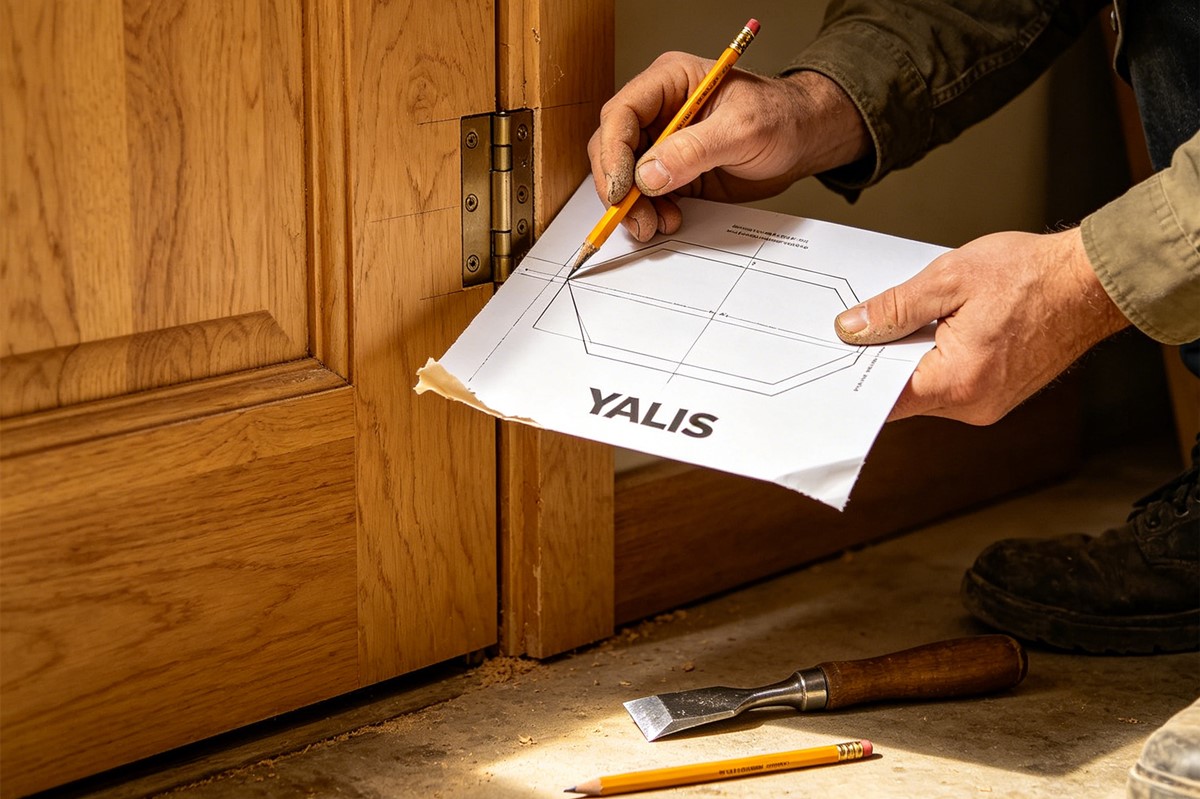
Part 1: Why a Deep Hinge Mortise Causes Problems
Hinge leaf sits below door surface → stress on screw roots
Door weight pulls hinge further down
Uneven gaps cause latch misalignment
Long-term: sagging door, loose screws
Part 2: 4 Repair Methods Compared
| Method | Material | Stability | Difficulty | Best For |
| 1. Cardboard/plastic shim | Cardboard, old credit card | Poor (compresses) | Very low | Temporary emergency |
| 2. Wood veneer shim | Thin wood sheet | Medium (can swell) | Low | Short-term use |
| 3. Epoxy + wood filler | Epoxy + fine sawdust | High (hardens) | Medium | Permanent repair |
| 4. Solid wood patch | Same-species wood block + wood glue | Highest (becomes one with door) | High | Permanent repair (recommended) |
Part 3: Most Secure Fix – Solid Wood Patch (Step by Step)
Tools & materials: wood block (same species as door), wood glue, chisel, clamp, sandpaper.
Clean mortise – remove dust and debris.·
Cut wood block – slightly larger than mortise; thickness = original depth + over cut depth.
Apply glue – coat both mortise and block evenly.
Insert & clamp – press block in, clamp or weight for 12-24 hours.
Flush surface – after curing, chisel/sand block flush with door face.
Re-cut mortise – chisel to exact hinge leaf thickness.
Install hinge – use stainless steel screws.
Why this is strongest: Same wood expands/contracts together; glue bond is stronger than raw wood; screws bite into solid material.
Part 4: When to Use Other Methods
Epoxy + wood flour – good for bathrooms (water-resistant), but color hard to match.
Hinge shim kit (metal/plastic) – quick for <1mm over-cut, but shims may be visible.
Longer screws – for <3mm over-cut; use screws 1.5x longer to reach deeper framing.
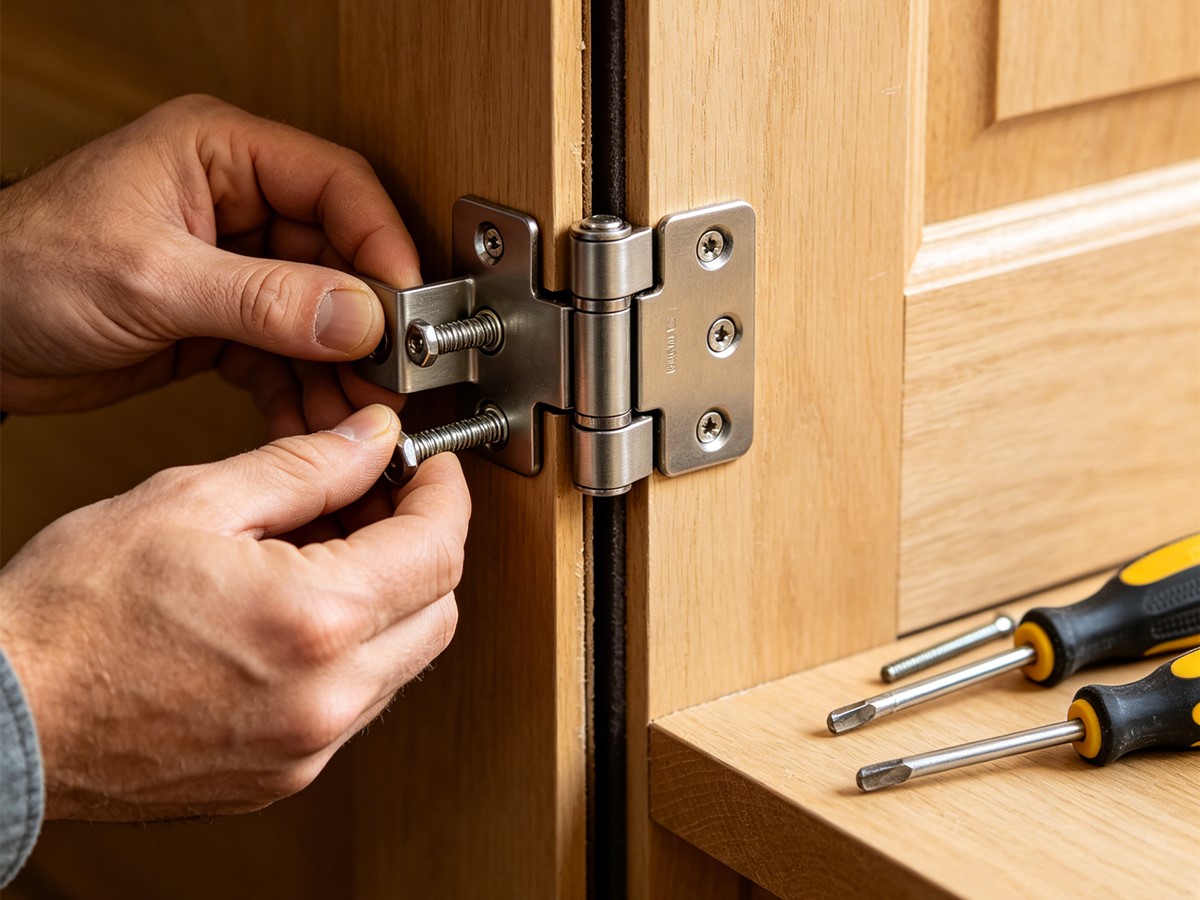
Part 5: Prevent Deep Cuts with YALIS Hinges
Use a hinge template – YALIS includes paper templates in every box.
Choose standard-thickness hinges – YALIS leaves are uniform 3mm/4mm.
Test depth first – chisel shallow, test fit, then deepen gradually.
| Type | Features | Best for |
| Standard ball bearing hinge | 3mm leaf, precise machining | General interior doors |
| 3D adjustable hinge | ±2mm adjustment | Expensive wood doors, old frames |
| Heavy-duty stainless hinge | 4mm leaf, 304 grade |
Entry doors, solid wood |
All YALIS hinges are 200,000-cycle tested.
Frequently Asked Questions (FAQ)
Q1: Can I use foam filler for a deep hinge mortise?
No. Foam is too soft – it will crush under door weight within days.
Q2: Do I need to repaint after wood patch repair?
Yes, to match color and protect against moisture. YALIS offers touch-up pens.
Q3: What if I don’t have a wood block from the same door?
Use a commercial hinge shim kit temporarily. For permanent fix, buy a small piece of similar wood.
Q4: Can a 3D adjustable hinge fix a deep mortise?
No. 3D hinges adjust door position, not the recess depth. You must still mount the hinge on a flush surface.
Q5: What screw length should I use after patching?
Use screws 5-10mm longer than original to bite into the patched block or deeper frame.
Q6: Does YALIS provide hinge installation templates?
Yes, every YALIS hinge box includes a paper template and QR video guide.
Don’t let a deep hinge cut ruin your door. Patch it properly, and your door hardware will perform for years.
Visit www.yalisdesign.com for premium hinges and installation guides.
Post time: May-22-2026