
Battery life is the number one concern for anyone considering a smart door handle. Will it die unexpectedly? How long will it last? Can you get locked out? With 17 years of manufacturing expertise, YALIS answers these questions and helps you manage your smart lock’s power with confidence.
Factors That Affect Battery Life
Several variables determine how often you’ll need to replace batteries:
1. Battery Type & Quality
High-quality alkaline batteries (like Duracell or Energizer) typically last longest and are least likely to leak. Avoid cheap no-name brands—leaking batteries can permanently damage your lock. Rechargeable batteries work but may have lower voltage and shorter lifespan between charges.
2. Usage Frequency
Every unlock uses power. A typical household uses 10-20 operations daily; commercial settings may see 50+. More use = shorter battery life.
3. Lock Type & Features
- Semi-automatic locks: 8-12 months typical
- Fully automatic locks: 6-10 months (motor does more work)
- Wi-Fi connected models: 4-8 months (constant communication drains faster)
- Video/face recognition: 3-6 months (most power-hungry)
4. Mechanical Condition
This is often overlooked but critical. A door that doesn’t move freely forces the motor to work harder, draining batteries faster. Check:
- Are door hinges loose? Tighten them.
- Does the latch align properly with the strike plate? Misalignment increases resistance.
- Is a door stopper preventing full closure, making the motor strain to lock?
5. Environment
Extreme cold (below -10°C) reduces battery performance. High humidity can accelerate self-discharge. Outdoor installations face greater temperature swings than interior doors.
Tips to Extend Battery Life
- Use quality batteries. Premium alkaline batteries provide consistent voltage and longer life.
- Keep mechanics smooth. Lubricate latch bolts periodically. Ensure door hinges are tight and the door swings freely.
- Optimize settings. If your lock has adjustable Wi-Fi frequency, choose longer intervals between updates.
- Monitor via app. Most smart locks, including YALIS models, provide battery percentage alerts. Replace when notified (typically 50-100 operations remaining).
- Replace all batteries at once. Never mix old and new, or different brands.
- Consider environment. In extreme climates, choose batteries rated for temperature extremes.
Emergency Solutions: What If Batteries Die?
Even with careful management, batteries eventually need replacement. Here’s how to avoid lockouts:
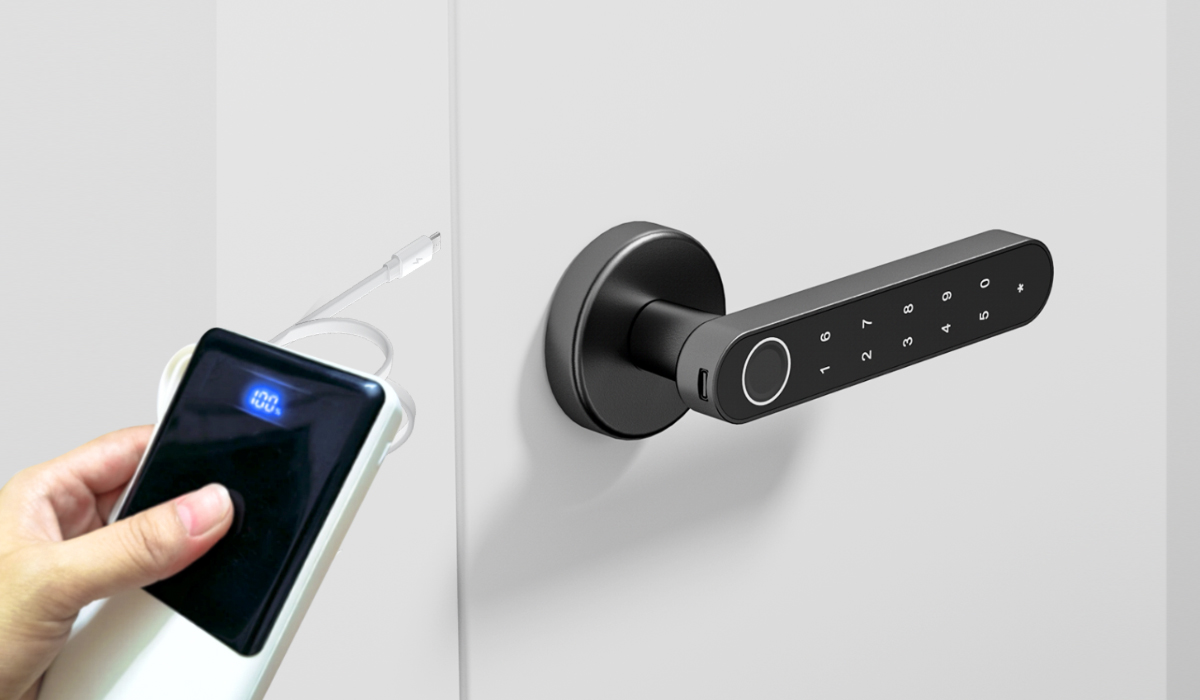
1. Emergency Power Port
Most smart locks have a Micro-USB or USB-C port underneath. A portable power bank can temporarily power the lock for emergency access. Keep a power bank in your car or bag.
2. Mechanical Key Backup
All compliant smart locks include a traditional key override. Store a spare key in your office, car, or with a trusted neighbor. YALIS smart locks feature discreetly hidden key cylinders that maintain clean aesthetics while ensuring you’re never locked out.
3. 9V Battery Contacts (select models)
Some locks allow temporary power by touching a 9V battery to contacts on the exterior.
4. Proactive Replacement
Set a calendar reminder to check batteries every 6 months. Replace when your app shows 20-30% remaining.
The YALIS Advantage: Smart Power Management
At YALIS, our 17 years of manufacturing experience inform every aspect of our smart locks:
- Low-power engineering: Our locks use advanced chipsets optimized for minimal energy consumption.
- Accurate monitoring: The YALIS app provides precise battery percentage and estimated remaining operations.
- Multi-level alerts: You’ll receive notifications at 20%, 10%, and 5% battery—no surprises.
- Easy battery access: Thoughtfully designed compartments make replacement quick and tool-free.
- Quality assurance: All components, from the motor to the circuit board, are tested for efficiency and reliability.
Conclusion
Smart door handle battery life is manageable with the right knowledge. Choose quality products, maintain your door’s mechanical health, and stay aware of battery status. With proper care, you’ll enjoy the convenience of smart access without the anxiety.
FAQ
Q: How long do smart lock batteries typically last?
A: For most YALIS smart locks with standard use (10-15 operations daily), expect 8-12 months from high-quality alkaline batteries. Features like Wi-Fi connectivity may reduce this to 4-8 months.
Q: Can I use rechargeable batteries in my smart lock?
A: Yes, but note that rechargeables typically have lower voltage (1.2V vs. 1.5V for alkaline) and may trigger low-battery warnings sooner. They also have fewer total operations per charge.
Q: What happens if my lock dies while I’m away?
A: Use the emergency power port with a portable charger, or the mechanical key backup. Always carry your key when traveling, or store one securely outside your home.
Q: Will cold weather affect my smart lock’s battery?
A: Yes. Extreme cold reduces battery performance. In northern climates, consider lithium batteries, which perform better in low temperatures than standard alkaline.
Q: How does door hardware affect battery life?
A: Significantly. A door with loose door hinges or a misaligned latch forces the motor to work harder, draining batteries faster. Regular maintenance of all door hardware—hinges, latch, strike plate—extends both mechanical and battery life.
Post time: Mar-20-2026