
Wooden door handles offer unmatched warmth and natural beauty. However, wood’s natural porosity makes it vulnerable to moisture—leading to swelling, cracking, or mold. With 17 years of manufacturing expertise, YALIS shares essential techniques to keep your wooden hardware beautiful and durable.
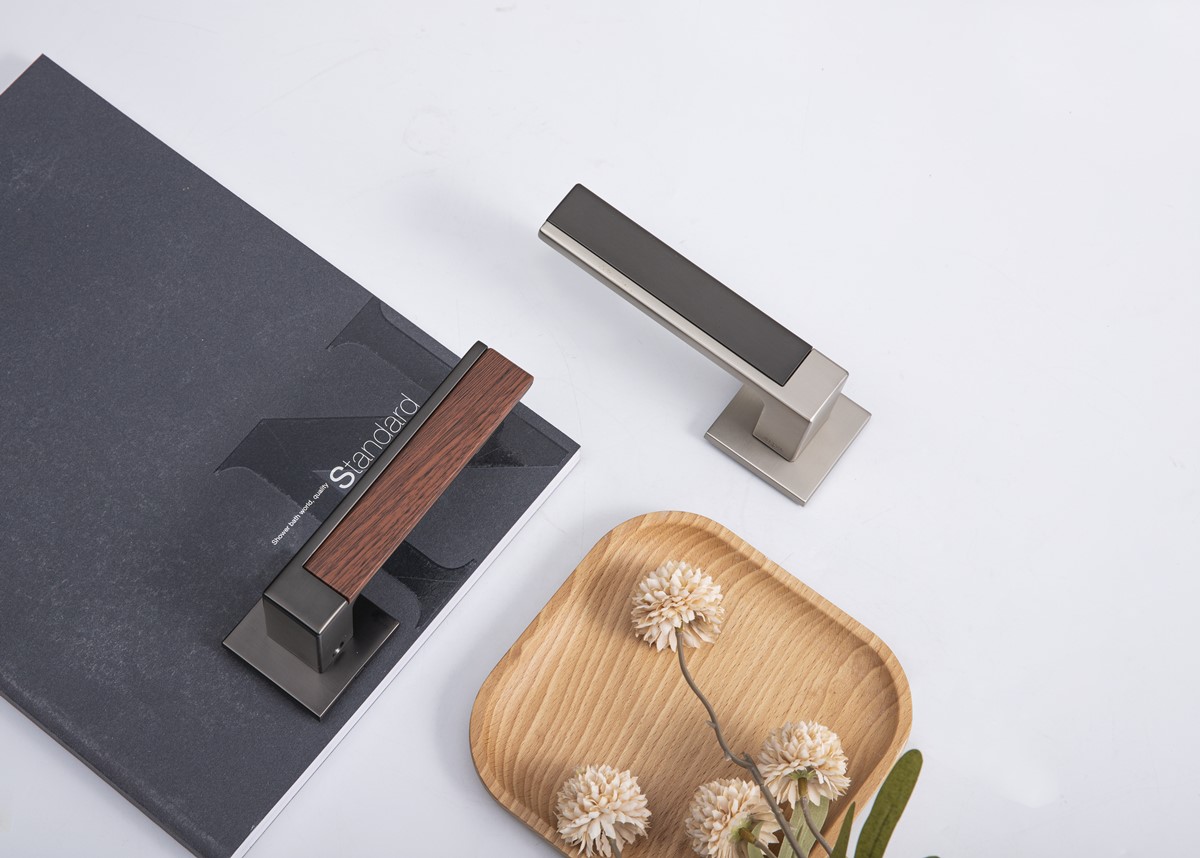
1. Start with the Right Wood
Not all woods perform equally in humid conditions. For lasting performance:
Teak: Naturally oily, excellent moisture resistance
White Oak: Dense, closed grain, stable
Walnut: Low shrinkage, naturally durable
Mahogany: Stable, resists swelling
Avoid softwoods like pine or untreated poplar for humid environments.
2. Pre-Treatment: Drying & Stabilization
Proper drying is critical. Wood should reach 8-12% moisture content—matching its service environment. YALIS uses precision-kiln-dried lumber, ensuring stability from the start. For high-humidity applications, vacuum resin stabilization fills wood cells, dramatically reducing moisture absorption.
3. Surface Coatings: The Primary Defense
| Coating Type | Moisture Protection | Best Use |
| PU Lacquer | Good | General interiors |
| UV-Cured Coating | Very Good | High-traffic areas |
| Composite (Sealer + Topcoat) | Excellent | Bathrooms, kitchens |
| Nano Coating | Superior | Premium, super-hydrophobic finish |
YALIS uses a multi-layer coating process—sealer coats fill grain, topcoats provide wear and moisture resistance. All products pass 24-hour water immersion testing.
4. Structural Design: Hidden Reinforcement
Smart design prevents moisture-related failure:
Metal core insert: Stainless steel or zinc alloy skeleton inside the wooden door handle maintains shape even if wood swells slightly
Segmented construction: Metal base contacts the door; wood section remains decorative
End-grain sealing: Critical—end grain absorbs moisture 3-5x faster than face grain
5. Installation Best Practices
Even the best-finished handle fails with poor installation:
Leave 0.5-1mm expansion gap between handle and door surface
Use stainless steel screws to prevent rust staining
Seal mounting holes with wax or clear coating before installation
6. Daily Care & Maintenance
Clean with a slightly damp cloth; dry immediately
Avoid prolonged water exposure
Reapply wood conditioner or wax annually
Ensure door hinges are tight—a sagging door stresses any handle
Check door stoppers to prevent sudden impacts that can crack coatings
7. Quality Verification
YALIS wooden handles undergo rigorous testing:
Heat & humidity: 40°C / 95% RH for 48 hours—no deformation
Thermal cycling: -20°C to 60°C cycles—coating intact
Water absorption: ≤5% after 24-hour immersion
When to Replace
Consider replacement if you notice:
Blistered or peeling coating
Visible cracks wider than 1mm
Persistent mold spots
Looseness that tightening cannot fix
Conclusion
FAQ
Q: Can wooden door handles be used in bathrooms?
A: Yes, with proper protection. Choose handles with metal core inserts and multi-layer coatings. YALIS’s bathroom-rated collection is specifically engineered for humid environments.
Q: How can I tell if a wooden handle has good moisture protection?
A: Look for smooth, uniform coating with sealed ends. Ask about testing—YALIS products pass 24-hour water immersion and humidity cycling tests.
Q: My wooden handle feels sticky. What’s wrong?
A: This often indicates coating degradation from moisture or improper cleaning. Try gentle cleaning with mild soap. If stickiness persists, consider professional refinishing.
Q: Can I install a wooden handle myself?
A: Yes, but follow guidelines: use stainless steel screws, seal mounting holes, and avoid over-tightening. YALIS provides detailed installation instructions with every product.
Q: How does YALIS ensure long-term moisture resistance?
A: We combine premium kiln-dried wood, metal core reinforcement, multi-layer coating, and rigorous testing—ensuring your door handle remains beautiful even in challenging environments.
Post time: Mar-27-2026