
Choosing a finish for your door handle, door hinge, or door stopper? We compare electroplating, sandblasting, brushing, and PVD coating for wear resistance. Learn which is best for your door hardware with YALIS’s expert guide.
Surface Finish Showdown: Which is More Wear-Resistant for Door Hardware? Electroplating, Sandblasting, Brushing, or PVD?
At YALIS, we understand that the beauty of your do or hardware—from a sleek door handle to a sturdy door hinge—is only as good as its durability. The surface finish is the first line of defense against daily wear, scratches, and corrosion. A common question we encounter is: which surface treatment offers the best wear resistance?
Today, we’re putting four popular finishes under the microscope: Electroplating, Sandblasting, Brushing, and PVD Coating. As a manufacturer with our own production lines, YALIS controls every step to ensure maximum quality and longevity, giving you true peace of mind. Let’s find out which finish stands the test of time.
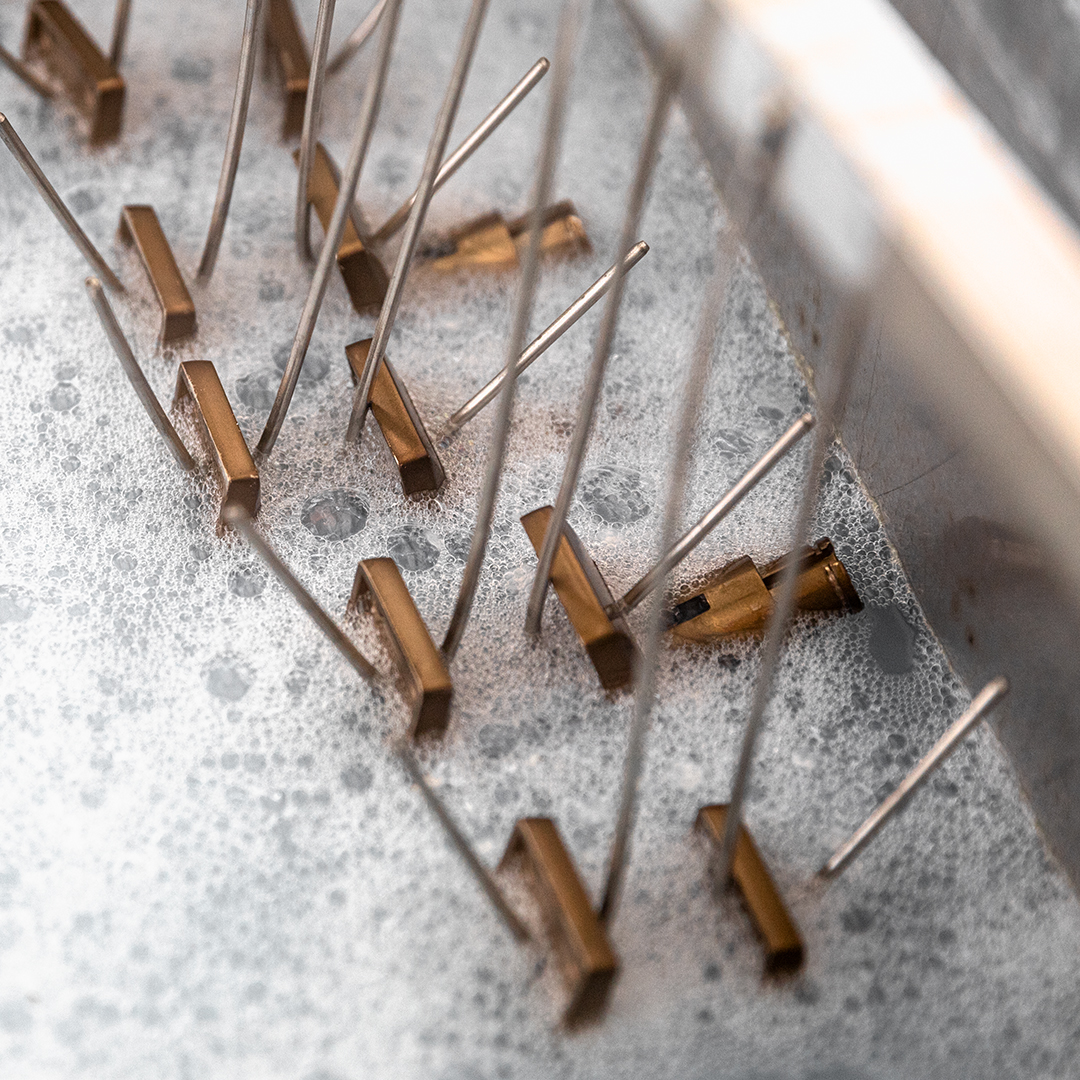
Part 1: Understanding the Four Key Surface Finishes
Before we compare, let’s define what each process entails.
Electroplating
Process: Uses an electrical current to deposit a thin layer of metal (like chrome or nickel) onto the base material.
Primary Goal: Enhances appearance, provides corrosion resistance, and increases surface hardness and wear resistance.
Sandblasting
Process: Propels a stream of abrasive material (like sand) at high pressure to clean or texture a surface.
Primary Goal: Creates a uniform matte or satin finish by physically altering the substrate’s texture. It is often a pre-treatment to improve paint or coating adhesion. It does not add a protective layer.
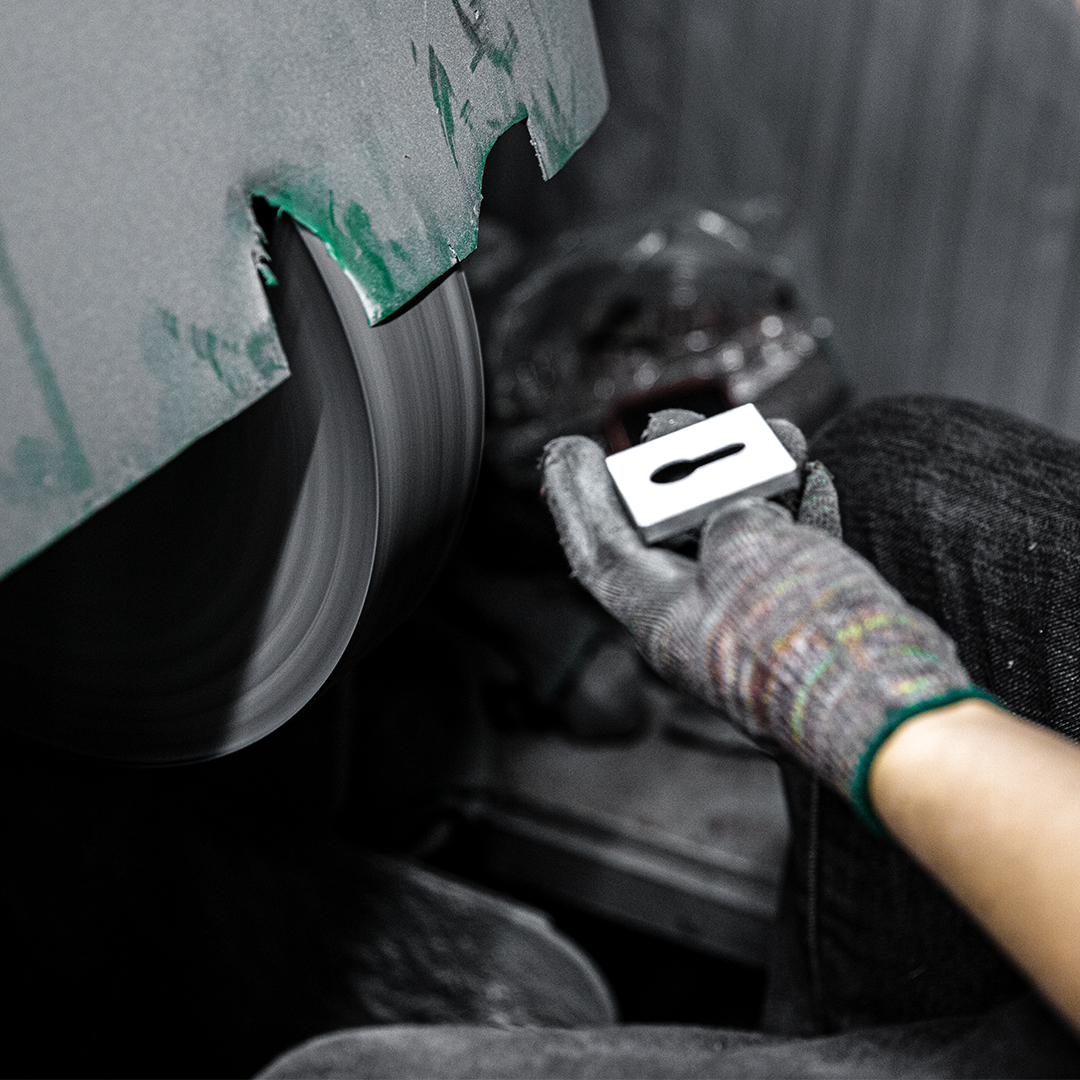
Brushing (or Satin Finishing)
Process: A brushing machine is used to create fine, consistent lines on the metal surface.
Primary Goal: Purely aesthetic, offering a modern, brushed metal look. Like sandblasting, it alters the surface texture but does not add a protective layer.
PVD Coating (Physical Vapor Deposition)
Process: A vacuum chamber process where a target material (like titanium or chromium) is vaporized and deposited as a thin, ultra-hard film on the component.
Primary Goal: To provide an exceptionally hard, durable, and corrosion-resistant finish with a wide range of color options (e.g., Black PVD, Brass PVD, Chrome PVD).
Part 2: The Wear Resistance Deep Dive
Wear resistance isn’t just one property; it’s a combination of hardness, coating thickness, and adhesion. Here’s how they stack up.
| Process | Core Principle | Typical Hardness | Coating Thickness | Wear Resistance Rating |
| PVD Coating | Addition (Hard Film) | Extremely High (HV1500+) | Thin (1-3 µm) | ★★★★★ (Champion) |
| Electroplating | Addition (Metal Layer) | High (e.g., Chrome HV800-1000) | Thicker (5-25 µm) | ★★★★ (Excellent) |
| Brushing | Subtraction (Texture) | Depends on Base Metal | None | ★☆ (Poor) |
| Sandblasting | Subtraction (Texture) | Depends on Base Metal | None | ★ (Least Resistant) |
Why is PVD the Champion?
PVD creates a ceramic-like layer (e.g., Titanium Nitride) that is significantly harder than even hard chrome. This makes it incredibly resistant to scratching, abrasion, and chemical corrosion. For a door handle or door hinge that sees constant use, PVD is the top-tier choice for maintaining a like-new appearance for decades.
Electroplating: The Tried-and-True Workhorse
Hard chrome electroplating is a classic for a reason. It provides a thick, hard, and very wear-resistant surface. It’s an excellent, cost-effective choice for heavy-duty applications and offers fantastic protection.
Why Brushing & Sandblasting Lag Behind
It’s crucial to understand that sandblasting and brushing are textural finishes, not protective coatings. They physically alter the top layer of the base metal. Once that textured surface is worn down or scratched, the damage is visible and often irreversible. A brushed door handle will show wear marks across its grain, and a sandblasted door stopper can become smooth and shiny in high-impact areas.
Part 3: Beyond Wear Resistance: A Holistic View
Choosing a finish involves more than just wear resistance.
Corrosion Resistance: PVD > Electroplating > Brushing ≈ Sandblasting. PVD forms a very dense, non-porous layer that excellently resists tarnish and salt spray.
Aesthetic Appeal: PVD offers rich, consistent colors. Electroplating provides a bright, mirror-like chrome. Brushing and sandblasting give a muted, matte aesthetic.
Cost & Eco-Friendliness: PVD is a premium, environmentally friendly process. Electroplating is mid-range but may have environmental considerations. Sandblasting and brushing are generally lower-cost options.
Base Material: PVD and electroplating have conductivity requirements, while sandblasting/brushing can be applied to almost any material.
Part 4: The YALIS Application Guide: Matching Finish to Function
So, which finish is right for your door hardware?
Choose PVD Coating When:
You demand the absolute best in durability, color consistency, and corrosion resistance.
YALIS Product Fit: Ideal for our premium door handle collections, commercial-grade door hinges, and frequently used door hardware where long-term aesthetics are critical.
Choose Electroplating When:
You need proven, high-performance wear resistance with a bright, traditional chrome look at a more accessible price point.
YALIS Product Fit: Excellent for all our standard door hinge and door stopper models, providing robust protection for residential and commercial use.
Choose Brushing or Sandblasting When:
The primary goal is a specific matte or satin aesthetic, and the part is not subject to high friction.
Critical Note at YALIS: We often use these as a base layer before applying a PVD or electroplated coating. This combines the desired texture with superior protection, ensuring your brushed door handle stays beautiful for years.
Conclusion: The Verdict on Durability
In the race for pure wear resistance, the ranking is clear: PVD Coating takes the crown, followed closely by the robust performance of Electroplating. Brushing and Sandblasting are primarily aesthetic choices with limited inherent wear resistance.
At YALIS, we don’t just apply finishes; we engineer solutions. Our in-house production line allows us to meticulously control each process, from base preparation to the final coating, ensuring every door handle, door hinge, and door stopper we produce meets our stringent quality standards. This integrated manufacturing is your guarantee of a product that looks stunning on day one and remains that way for years to come, with minimal need for maintenance or replacement.

Ready to specify the perfect finish for your project? Explore the YALIS collection and experience the difference that quality-controlled manufacturing makes.
Post time: Dec-01-2025