
Understanding the critical safety thresholds for frameless glass door hardware
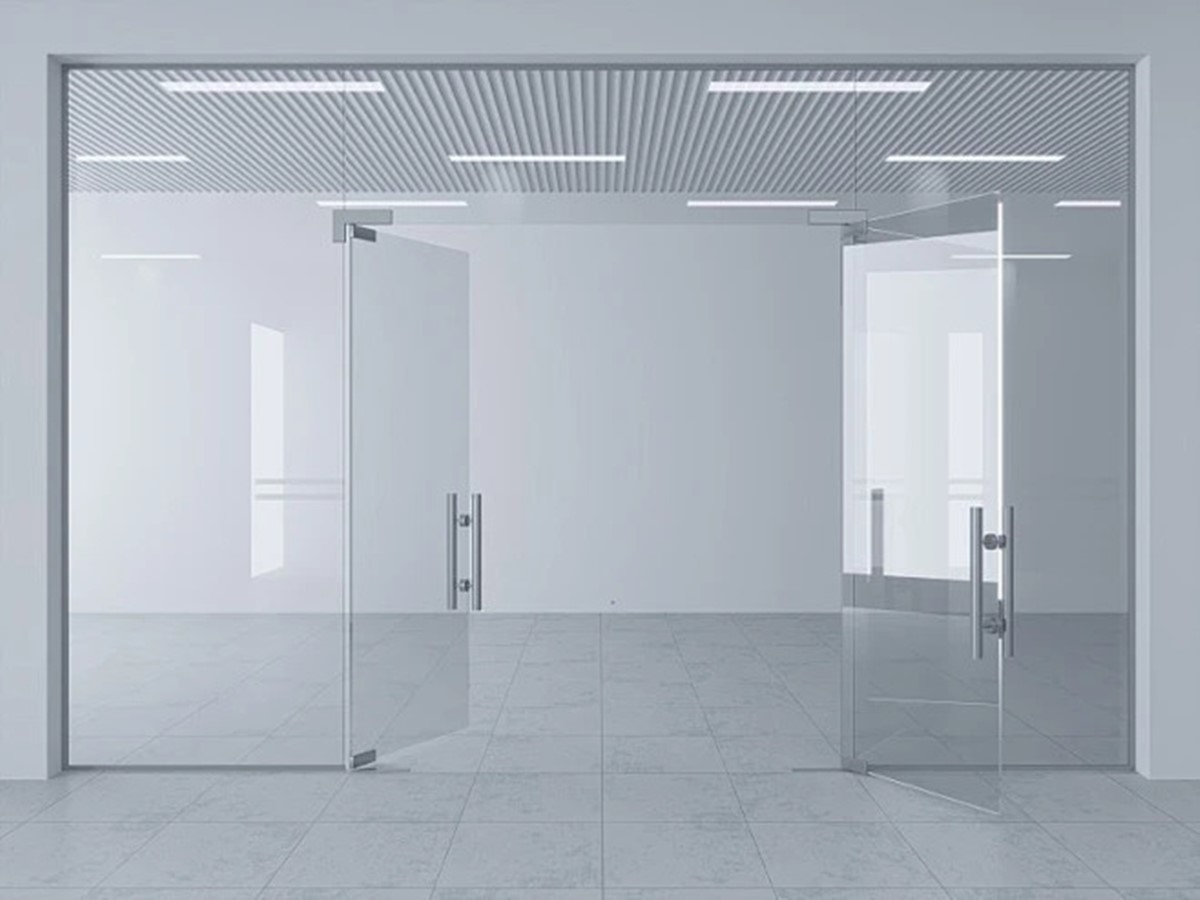
Frameless glass doors have become a defining feature in modern architecture—from corporate lobbies and retail storefronts to luxury residences. Their appeal lies in their clean lines and unobstructed transparency. However, this minimalist aesthetic comes with a critical engineering challenge: the glass panel relies entirely on its door hardware for structural integrity. Unlike wood or metal doors, glass is a brittle material that cannot tolerate errors in clamping force.
So, what clamping force is actually safe? The answer is nAot a single number—it depends on glass thickness, door weight, fixture count, and application. This guide breaks down the standards, data, and best practices to help you specify the right glass door clamps for every project.
Industry Standards for Glass Door Clamps
Several standards govern the safety and performance of glass door hardware:
QB/T 5280-2018 – China’s light industry standard for glass door hinges and fixed clamps, applicable to frameless swing glass doors-
JG/T 326-2011 – specifies requirements for door clamps, hinges, and handles used in swing glass doors
DB44/T 1505-2014 – Guangdong provincial standard requiring that clamps withstand 1000N static load with displacement under 1mm
Compliance with these standards is the foundation of safe installation. At YALIS, all products are manufactured to meet or exceed these requirements, backed by ISO9001, SGS, TUV, and EURO EN certifications.
Clamping Force Reference Data
Different clamp types offer vastly different load capacities. Here is a comparative overview:
| Clamp Type | Clamping Force / Load Capacity | Notes |
| Shower clamps (zinc alloy) | ~35 kg per pair | Lower load capacity, prone to brittleness- |
| Glass clamps (SGS-tested) | 46.9 kg | Internationally certified holding force |
| Frameless glass door hinges | ≥35 kg per unit (static) | Based on 8–12mm tempered glass- |
| Bottom glass door clamps | Up to 80 kg | Suitable for 12mm glass panels |
| Top clamps with hangers | Up to 300 kg | Used for frameless automatic doors- |
| CS frameless glass clamps | 240 kg (500 lbs) | Designed for sliding glass panels |
| Heavy-duty glass door clamps | 80 kg per unit | For industrial/commercial environments |
The wide range—from 35 kg to over 300 kg—demonstrates that there is no one-size-fits-all answer. Selection must be based on the specific door configuration.
Key Factors Affecting Safe Clamping Force
1. Glass Thickness and Weight
Glass weight is calculated simply: 1mm-thick glass weighs approximately 2.5 kg per square metre.
For example, a 12mm-thick, 2.3m × 1m glass door weighs about 69 kg. The total clamping force must exceed this weight with a significant safety margin.
2. Static vs. Dynamic Load
Doors experience both static loads (the weight of the glass) and dynamic loads (the forces of opening, closing, and impact). Hardware must withstand repeated cycling—YALIS’s GUARD series, for instance, has passed 200,000 cycle tests reaching EURO standards.
3. Clamp Material
304 Stainless Steel: High rigidity, corrosion-resistant, excellent load-bearing-
Brass: Aesthetic appeal, higher cost
Zinc Alloy: Lower cost but poorer load capacity and prone to brittle failure
YALIS manufactures clamps primarily from 304 stainless steel and aluminum alloy, ensuring both durability and design integrity-.
4. Durability and Fatigue Resistance
International standards typically require that clamping force degradation remains under 15% after 100,000 open-close cycles. Fatigue testing is essential for long-term safety in high-traffic environments.
How Clamps Work: The Safety Design Principle
Glass clamps secure panels through mechanical compression combined with pressure distribution. EPDM rubber pads inside the clamp disperse clamping force evenly across the glass edge, preventing localized stress concentrations that could cause shattering.
Critical installation practices include:
Using torque wrenches to apply even, controlled pressure
Following a star-pattern tightening sequence to distribute force uniformly
Ensuring anti-lift protection on top hinges or clamps
Allowing thermal expansion gaps between the panel and frame
"YALIS Precision: Our drilled hardware kits include precision-machined components and high-quality isolation bushings to ensure a perfect, safe fit."
How to Determine If Your Clamping Force Is Safe
The Safety Formula
Total Clamping Force ≥ Glass Weight × Safety Factor (recommended ≥2)
For a 69 kg glass door using two 46.9 kg clamps, the total capacity is 93.8 kg—exceeding the weight with a 1.36 safety factor. For higher-traffic areas, consider three clamps or upgrading to higher-capacity models.
Selection Checklist
*Confirm glass thickness matches clamp specification (commonly 8mm, 10mm, 12mm)
*Verify clamp material (prioritise 304 stainless steel)
* Check for relevant certifications (QB/T 5280, JG/T 326, etc.)
* Ensure rated load meets or exceeds door weight × safety factor
*Confirm EPDM or silicone pads are included

Why YALIS?
With 19 years of technical leadership in door hardware solutions, YALIS Design has grown into a modern enterprise with a nearly 10,000 sqm manufacturing campus and a team of over 100 employees. We offer complete, compatible hardware systems—from pivots and clamps to door handles and locks-.
Our in-house R&D team focuses on original, minimalist designs. Every production step—from die-casting and CNC machining to polishing and final inspection—meets ISO9001:2015 standards. We export to multiple countries and serve global architects, designers, and contractors who demand reliability, aesthetics, and value.
Conclusion
There is no single "safe" clamping force number—it depends on glass weight, fixture count, application, and material quality. The core principle is simple: total clamping force must exceed glass weight by a safety margin of at least 2×, verified through durability testing.
When specifying door hardware for frameless glass doors, prioritise certified products from manufacturers with proven quality systems. YALIS offers precisely that: engineering excellence backed by 19 years of industry experience, global certifications, and a commitment to minimalist design that doesn't compromise safety.
FAQ
Q1: What is the minimum clamping force for a standard glass door?
There is no universal minimum—it depends on door weight. A typical 12mm × 2.3m × 1m door weighing ~69 kg requires at least 138 kg total clamping force (2× safety factor) across all clamps.
Q2: Can I use zinc alloy clamps for commercial glass doors?
Zinc alloy clamps typically support only ~35 kg per pair-. For commercial applications with heavier doors and higher traffic, 304 stainless steel or high-grade aluminum alloy is strongly recommended.
Q3: What standards should compliant glass door clamps meet?
Look for compliance with QB/T 5280-2018, JG/T 326-2011, or DB44/T 1505-2014. YALIS products additionally hold ISO9001, SGS, TUV, and EURO EN certifications.
Q4: How do I know if my clamps are overtightened?
Overtightening can cause glass breakage. Always use a torque wrench and follow the manufacturer's specified torque values. Tighten in a star pattern across multiple passes.
Q5: Does YALIS offer custom glass door hardware?
Yes. YALIS provides customized services—the glass splint can be sized according to aluminum glass door frames, a`nd finishes can be matched to the door surface.
Q6: What is the lifespan of a quality glass door clamp?
With proper installation, high-quality stainless steel clamps from certified manufacturers can last 10+ years. YALIS products undergo rigorous cycle testing—the GUARD series has passed 200,000 open-close cycles.
For more information on YALIS glass door hardware solutions, visit www.yalisdesign.com or contact our team for project-specific recommendations.
Post time: Sep-11-2026